
Tag: Online Slots

How to Review an Online Slot Fairly: A Practical Method

A flashy bonus round or a lucky first session can make almost any online slot look impressive. A losing streak can create the opposite reaction, even when the game itself has not changed.

To Review an Online Slot Fairly, you need to look beyond your temporary balance. A useful review examines the rules, mathematical information, gameplay features, technical performance, and clarity of the interface.

It also separates personal taste from measurable facts. This approach helps readers understand what the game actually offers instead of giving them promotional language, unsupported complaints, or conclusions based on one unusually lucky session.

Identify the Exact Game Version

Begin by recording the game title, developer, platform, device, and testing date. Mention whether you played in demo mode or used a real-money account.

You should also note the displayed RTP, stake range, volatility level, and maximum win when available. The same title may be offered with different settings across operators or jurisdictions, so avoid assuming every version is identical.

Read the Rules Before Playing

Open the paytable and help section before pressing spin. Check how winning combinations form, what wild and scatter symbols do, how bonuses activate, and whether special limits apply.

British technical standards require game rules and information about the likelihood of winning to be easily available before a player commits to gamble. This information may include RTP, house edge, or winning probabilities.

If important details are confusing or difficult to locate, mention that as a transparency issue.

Interpret RTP and Volatility Correctly

RTP is a long-term percentage, not a promise for one player. Actual RTP is calculated by dividing total winnings by total turnover across the measured play.

Do not describe a slot as unfair because your balance fell during 100 test spins. That sample can show how features and animations behave, but it cannot prove the game’s long-term return.

Volatility should also be treated carefully. Use the developer’s published category when available rather than guessing from a brief session.

Evaluate the Features in Context

A game with many listed mechanics is not automatically better than a simple slot. Ask whether each feature is understandable and whether it changes the gameplay in a meaningful way.

For example, cascading reels may create consecutive combinations, while a multiplier meter can increase selected awards. Explain what these systems actually do instead of repeating phrases such as “action-packed gameplay” from promotional material.

Also consider how often the base game provides interesting decisions or visual changes between bonus rounds.

Test Usability and Performance

Review loading speed, button size, text readability, sound controls, paytable navigation, and screen orientation. When claiming that a slot works well across devices, test it on both mobile and desktop.

Describe technical problems precisely. “The game froze twice on Safari during a 30-minute test” is more useful than saying that it is simply buggy.

Include the device and browser used so readers understand that your experience may not apply to every setup.

Separate Fairness from Personal Luck

A reviewer cannot prove RNG fairness through a few hundred spins. Regulated random outcomes should be demonstrably random, and adaptive behaviour that changes probabilities according to recent results is prohibited under British standards.

Independent laboratories use statistical and technical methods to test RNG unpredictability and possible bias.

Your role is to check visible licensing, testing information, and game disclosures. Do not claim scientific certification based on personal results.

Consider Responsible Product Design

Examine how clearly the game displays stakes, awards, session information, and net results. Sound and animation should not make a return smaller than the stake feel like a profitable win.

Current British standards prohibit celebrating a return that is equal to or lower than the total amount wagered.

A balanced review should discuss pace and result clarity alongside themes, graphics, and bonus potential.

To Review an Online Slot Fairly, identify the exact version, study its rules, interpret RTP correctly, and examine features in context. Test usability on every device you discuss and support technical criticism with specific observations.

Most importantly, separate game quality from short-term wins or losses. A reviewer can assess transparency, design, performance, and entertainment value, but cannot certify RNG fairness through casual play.

Create a repeatable checklist, disclose your testing conditions, and explain how you reached each conclusion. Apply that process to your next review so readers receive useful evidence instead of hype, frustration, or personal superstition.

Free Slots vs Real-Money Slots: What Actually Changes?

At first glance, free and real-money slot games can look almost identical. They may use the same reels, symbols, soundtrack, bonus rounds, and spinning animations. However, the experience changes significantly once actual money enters the picture.

The biggest difference in Free Slots vs Real-Money Slots is not necessarily the visual design. It is the value attached to every spin.

Free games use virtual credits that cannot be withdrawn, while cash games involve genuine financial wins and losses.

Understanding the differences can help you use demo mode realistically and avoid assuming that virtual success guarantees real-money results.

Free Slots Use Virtual Credits

A free slot normally begins with a balance of imaginary coins. You can change the virtual stake, spin the reels, and collect simulated payouts without depositing money.

These credits have no monetary value. A balance of 50,000 demo coins may look impressive, but it cannot be transferred to a bank account or exchanged for a prize.

The UK Gambling Commission defines play-for-free mode as a demonstration version in which customers neither stake nor win money or anything of monetary value.

Real-Money Slots Involve Financial Risk

In real-money mode, each spin removes genuine funds from your account balance. A winning result may add withdrawable money, subject to the operator’s rules, verification procedures, and any applicable bonus conditions.

For example, placing 100 spins at $0.50 each creates total stakes of $50 before accounting for any returns. The same activity in demo mode may change only an imaginary balance.

This financial element can also make wins and losses feel more intense. Demo play may feel casual because there is nothing tangible to lose.

The Game Rules May Stay the Same

On regulated British websites, a free version offered alongside a real-money game must use the same game rules. Operators must also take reasonable steps to ensure that the demo accurately represents the likelihood and distribution of prizes in the paid version.

This means paylines, symbol values, and bonus triggers should not secretly become easier simply because no money is being used.

However, these requirements depend on the jurisdiction and the context in which the demo is offered. Always read the information displayed around the game.

Both Modes Can Use Random Outcomes

Online slots commonly rely on a random number generator, usually called an RNG, to produce unpredictable results. An RNG-driven game does not need to compensate for a previous win or loss.

The UK Gambling Commission requires regulated random outcomes to be demonstrably random and prohibits adaptive behaviour that changes the game in response to recent results.

Therefore, losing five demo spins does not make the sixth spin “due” to win. The same misunderstanding can become expensive when carried into cash play.

RTP Does Not Predict a Session

Return to Player, or RTP, describes a game’s designed long-term return as a percentage of total stakes. It does not tell an individual player what will happen during ten, fifty, or even several hundred spins.

Regulatory guidance explains that fully random games may require around a million or more game cycles before their observed results begin approaching the theoretical percentage.

A strong demo session is therefore not proof that the real-money version will produce similar results.

Bonuses Have Different Meanings

A demo bonus round simply awards additional virtual credits or features. In real-money play, a similar feature can affect an actual balance.

Casino promotions create another distinction. Promotional free spins may include wagering requirements, expiry dates, maximum conversion limits, or eligible-game restrictions. These are not the same as unlimited demo spins.

Always check whether “free spins” refers to practice mode or a financial promotion.

Accounts and Verification Can Change

Many demo games open without a deposit, although age restrictions may still apply. Real-money play usually requires registration, identity checks, payment details, and compliance with local gambling laws.

Regulated operators may also provide account histories, spending tools, deposit limits, and reality checks. The UK Gambling Commission’s technical standards include measures intended to help customers track the time they spend gambling.

The main difference in Free Slots vs Real-Money Slots is the financial consequence of each spin. Demo games use valueless credits, while cash games involve deposits, genuine losses, possible withdrawals, and additional account requirements.

Although regulated demo and paid versions may share the same rules and probabilities, short-term results remain unpredictable. Use free mode to explore controls, paylines, themes, and bonus mechanics-not to forecast future winnings.

Before considering cash play, read the paytable, understand the total cost of repeated spins, check local rules, and set a firm spending limit that you can comfortably afford to lose.

How Jackpot Slots Work: Fixed, Local, and Progressive Prizes

Jackpot slots attract attention because they advertise prizes that can be much larger than ordinary line wins. Some display a fixed top prize, while others show a number that keeps increasing as more qualifying bets are placed.

But how do Jackpot Slots Work behind the spinning reels? The answer depends on the type of jackpot. A prize may be fixed inside one game, linked to machines at one venue, or shared across a network of online platforms.

The jackpot can be triggered through a symbol combination, a bonus feature, or a randomly selected qualifying result. Understanding the rules is essential because not every stake or game round automatically qualifies for the headline prize.

What Is a Jackpot Slot?

A jackpot slot is a game offering one or more top-tier prizes in addition to its regular payouts. The jackpot may appear in the paytable as a fixed amount or on a live meter above the reels.

Ordinary wins are usually based on matching symbols, paylines, clusters, or ways to win. The jackpot follows a separate set of conditions that should be explained in the game information.

Regulated progressive games must clearly describe how prizes are funded, determined, and awarded before customers commit to playing.

How Fixed Jackpots Work

A fixed jackpot has a predetermined value that does not grow with each wager. For example, a game might offer a top prize of 5,000 times the triggering stake.

If the qualifying stake is $1, a 5,000× jackpot would equal:

$1 × 5,000 = $5,000

The maximum award may depend on the selected bet or the number of active paylines. The paytable should state whether a lower stake receives the full amount or a reduced prize.

How Progressive Jackpots Work

A progressive jackpot can increase over time. It normally begins at a starting amount called a seed value, and part of qualifying wagering may contribute to its growth.

The exact contribution system varies. It might come from one game, several linked machines, or a much wider online network.

UK technical standards require progressive rules to explain how the prize is funded, its starting value, any upper limit, and what happens to additional contributions when the jackpot reaches a cap.

Local and Networked Jackpots

A local progressive may connect games inside one casino, website, or operator network. Since fewer players contribute, its prize pool may grow more slowly.

A wide-area or networked progressive can link eligible games across multiple locations or platforms.

More participation can produce a faster-growing headline value, although the exact probability of winning still depends on the approved game mathematics.

The current prize should be visible to eligible players and updated after changes, particularly when it resets following a win.

How Is the Winner Selected?

Some jackpots require a particular group of symbols to land on an active payline. Others are triggered through a bonus wheel, mystery event, or random qualifying result.

Digital slots generally use a Random Number Generator to determine outcomes. Independent laboratories test RNG systems to check that results are unpredictable and do not contain unfair bias toward selected outcomes.

Previous results do not make a jackpot due. A game that has not awarded its top prize recently is not required to pay it on the next round.

Does Every Bet Qualify?

Not always. Some games require a minimum stake, maximum stake, active jackpot side bet, or specific game mode.

The rules should clearly state when a player is not eligible. They should also explain the theoretical RTP that applies when the jackpot component is unavailable.

Before spinning, check the total wager and look for phrases such as “jackpot eligible,” “qualifying bet,” or “minimum stake required.”

What Happens After Someone Wins?

After a progressive prize is awarded, the visible amount normally returns to its seed value rather than falling to zero. The pool then begins growing again under the published rules.

Systems must also explain how simultaneous or apparently simultaneous triggers are handled. This matters for network games where communication delays could make two wins appear to happen at the same moment.

A reset does not make another jackpot impossible. Each new qualifying result remains subject to the game’s probability model.

Jackpot slots can offer fixed prizes, local progressives, or networked jackpots supported by qualifying play.

A jackpot may be activated through symbols, a bonus feature, or a random trigger, and the prize usually resets to a published seed value after it is won. Always read the paytable before playing.

Confirm the required stake, jackpot eligibility, funding method, and applicable RTP. Never assume a growing prize is ready to pay or increase your wager to chase it.

Treat jackpot slots as paid entertainment, choose an affordable limit, and stop once that money or your planned playing time is gone.

What Are Megaways Slots? A Beginner’s Guide to Dynamic Reels

Traditional online slots usually keep the same number of rows on every spin. Megaways games take a different approach.

Their reels can display changing numbers of symbols, so the layout-and the number of possible winning combinations-may be different each time you press spin.

So, what are Megaways slots, and how do they work? Megaways™ is a dynamic slot mechanic created by Big Time Gaming. The system replaces a fixed grid and standard paylines with variable reel heights and potentially thousands of ways to win.

The format became especially well known through games such as Bonanza, although Megaways is now licensed across titles from multiple game providers.

What Makes Megaways Different?

A regular five-reel slot might show three symbols on every reel. That creates a consistent 5×3 grid from one round to the next.

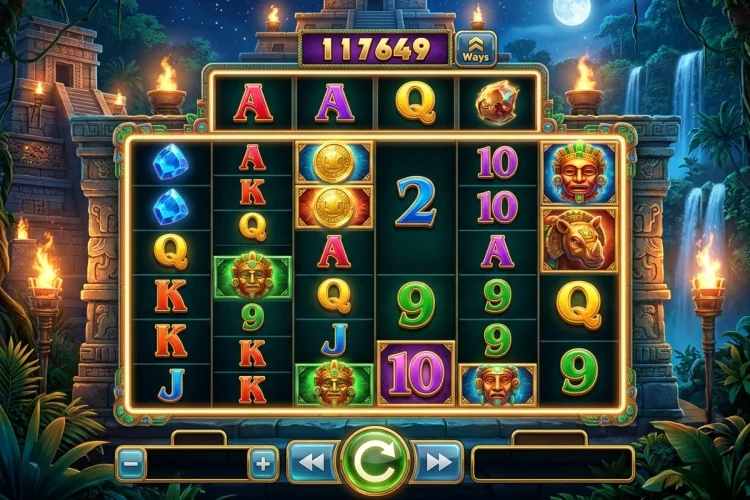
A typical Megaways game uses six reels whose heights can change independently. Big Time Gaming describes its mechanic as displaying between two and seven symbols per reel, potentially creating up to 117,649 winning ways.

The result is a screen that may look narrow on one spin and much taller on the next.

How Variable Reels Work

Before each result is displayed, the game determines how many symbol positions will appear on every reel. One reel might show three symbols, another six, and another only two.

Because the reel heights change independently, the number of available win ways also changes. A screen with fewer symbols usually has fewer possible combinations than one where all six reels are fully expanded.

More visible positions do not guarantee a payout. They simply create a larger number of possible symbol routes.

What Does “Ways to Win” Mean?

Megaways games normally replace fixed payline shapes with adjacent-symbol combinations. In standard versions, matching symbols generally need to appear on consecutive reels from left to right.

You do not need to follow a diagonal or zigzag line. If a qualifying symbol appears more than once on a reel, each matching position may contribute another winning way.

The game’s paytable explains how many adjacent reels are required. Higher-value symbols may pay across three reels, while lower-value icons may need four or more.

Why 117,649 Is Commonly Advertised

A standard six-reel Megaways layout can display as many as seven symbols on each reel. Multiplying those positions gives the maximum number of ways:

7 × 7 × 7 × 7 × 7 × 7 = 117,649

This is a maximum rather than the number used on every round. If some reels display only two, three, or four symbols, the current total will be lower.

Certain Megaways titles can exceed the familiar figure by expanding reels further during special features. White Rabbit Megaways, for example, advertises up to 248,832 ways during its feature.

What Are Cascading Reels?

Many Megaways games combine dynamic reels with cascades, sometimes called reactions. After a winning combination is paid, its symbols disappear and new ones fall into the empty positions.

The game then checks the new layout for another win without deducting a separate stake. This process continues until no new winning combination appears.

Big Time Gaming’s Bonanza uses its Dual Reaction system to cascade symbols from vertical and horizontal directions. Not every Megaways title uses exactly the same cascading rules, so the paytable remains essential.

How Free Spins Usually Work

Free spins are commonly triggered by scatter or bonus symbols. During the feature, the game may add persistent multipliers, retriggers, sticky wilds, or fully expanded reels.

In Bonanza, for instance, winning reactions during free spins increase an unlimited multiplier. Other games use completely different feature structures.

A bonus can provide more rounds or enhanced mechanics, but it does not guarantee a profitable result.

RTP and Volatility Still Matter

Megaways describes the reel mechanic, not the game’s Return to Player percentage. Two Megaways slots can have different RTP settings, volatility levels, maximum payouts, and bonus probabilities.

RTP represents the theoretical return across extended play, while actual short-session results can vary considerably. RNG testing is also used to examine whether slot outcomes remain unpredictable and operate according to the approved mathematical model.

Check the active game’s information screen because the same title may be available in different mathematical configurations.

Megaways slots use changing reel heights to create a different number of winning ways on each spin. A typical six-reel game can offer up to 117,649 combinations, while cascades may create several consecutive evaluations from one paid round.

Free spins, multipliers, and special reel expansions can add further variety. These features make the layout more dynamic, but they do not guarantee better odds or regular wins.

Before playing, check the official paytable, current win-way count, RTP, volatility, and total stake. Explore unfamiliar mechanics in demo mode first and treat every real-money wager as an entertainment expense that could be lost.

How Many Scatters Are Needed to Trigger Free Spins? Simple Guide

Scatter symbols are often the key to unlocking one of the most popular features in an online slot: the free spins round.

When the required number appears, the game may change its background, introduce extra wilds, and award several rounds without deducting a new stake for each spin.

So, how many scatters are needed to trigger free spins? Three is a common requirement, but it is not a universal rule. Some games need two, four, or five symbols, while others use collection meters or mystery triggers instead.

The exact answer always comes from the slot’s official paytable. Understanding the trigger rules before playing can prevent confusion and help you follow what is happening on the reels.

Three Scatters Are a Common Trigger

Many five-reel slots use three scatter symbols as the minimum requirement for entering the bonus round. These symbols may appear anywhere on the visible grid rather than following a traditional payline.

A typical game might award eight or ten free spins when three scatters land. However, this is a common design choice, not an industry-wide rule that every developer must follow.

The game description should explain the number and type of symbols required to qualify for a feature or bonus round.

Some Slots Require More or Fewer

A slot may trigger its bonus with two special symbols, particularly when one appears on a specific reel and the other lands elsewhere. Other games require four scatters before any feature begins.

Larger grids may use different systems because more symbol positions are visible. A six-reel game, for example, might use four qualifying icons rather than the familiar three-scatter format.

Never assume that a symbol labelled “scatter” automatically activates free spins after the third appearance.

More Scatters May Award More Spins

Even when three scatters are enough to start the bonus, landing four or five may produce a larger reward.

A game could use a structure such as:

Three scatters: 8 free spins
Four scatters: 12 free spins
Five scatters: 20 free spins

These numbers are only an illustration. Some games increase the number of rounds, while others add a larger starting multiplier or an immediate cash prize.

Read the paytable to see whether additional scatters change the feature or simply activate the same basic bonus.

Scatter Placement Can Matter

Scatter symbols often work independently of paylines, but their position may still matter. Certain slots allow bonus symbols to appear only on selected reels.

For example, the trigger might require one scatter on reels one, three, and five. Another game may accept three symbols anywhere on the screen.

Some titles also use “bonus” symbols rather than scatters. Although the icons may look similar, their rules can be different.

How Retriggers Work

Scatters may continue to appear after the free spins feature has started. When enough land during the bonus, they can award additional rounds. This is known as a retrigger.

Suppose a player starts with ten spins and receives five more during the fourth round. After that spin ends, eleven rounds would remain.

Some games permit repeated retriggers, while others set a maximum number of additional spins. The limit should be explained in the rules available to the player.

Does a Near Miss Mean a Bonus Is Coming?

Seeing two scatters and a third symbol stopping just outside the grid does not mean the feature is becoming more likely. The animation may look close, but it cannot predict the next round.

Online slots generally use a Random Number Generator to determine the symbols shown after each spin. Independent laboratories test RNG systems for unpredictability and potential bias.

Previous near misses, bonuses, wins, and losses do not force a particular result on the next spin.

Where to Find the Exact Requirement

Open the game’s information menu before placing a wager. Look for a question mark, paytable icon, “Help” button, or “How to Play” section.

The rules should identify the scatter symbol, minimum trigger requirement, number of awarded spins, retrigger conditions, and applicable multipliers.

Regulated games are expected to provide relevant rules and feature information before players commit money.

Demo mode can also help you explore the interface, but a practice result cannot predict what will happen during real-money play.

Three scatters commonly trigger free spins, but every online slot can use its own requirements. Some features need two or four symbols, while additional scatters may award more rounds, higher multipliers, or an immediate prize.

Placement and retrigger rules can also vary. The only reliable answer is found in the active game’s official paytable.

Check the trigger requirements before playing and never assume that repeated near misses mean a bonus is due. Treat free spins as part of a random game, set a firm entertainment budget, and stop when your planned money or time limit is reached.

How Do Free Spins Work in Online Slots? A Beginner’s Guide

Free spins are among the most recognisable features in online slot games. Land a few special symbols, and the reels may suddenly switch to a bonus mode where several rounds are played without deducting a new stake from your balance.

However, the word “free” can be slightly misleading. In-game free spins usually need to be triggered through a paid round, while promotional spins from an operator may come with eligibility rules or withdrawal conditions.

Understanding how free spins work in online slots helps you read the game correctly and avoid unrealistic expectations. The feature may include extra wilds, multipliers, or retriggers, but every result is still controlled by the slot’s mathematical model.

What Are Free Spins?

Free spins are bonus game rounds that do not require an additional stake once the feature has started. They normally use the same basic reels as the main game, although the rules may change during the bonus.

For example, the base game may have ordinary wild symbols, while the free-spin round includes expanding wilds or increasing multipliers. Independent testing of regulated games can include checks that bonuses and free spins activate correctly and award the intended payouts.

How Are Free Spins Triggered?

A common trigger is landing three or more scatter symbols. These icons may need to appear anywhere on the grid rather than on a traditional payline.

A game might award eight spins for three scatters, twelve for four, and twenty for five. Other slots use collecting meters, mystery triggers, bonus wheels, or special symbol combinations.

The exact requirements are always explained in the paytable. Regulated online games should make their rules and available prizes accessible before a player commits money.

What Happens During the Bonus Round?

Once the feature begins, the game records the number of spins awarded and starts the bonus sequence. In some jurisdictions, bonus rounds can continue automatically because no additional wager is being placed for each individual spin.

The reel layout may remain unchanged, but special mechanics can become active. These may include sticky wilds, extra symbols, expanding reels, cascading wins, or prize multipliers.

Some games also allow retriggers. Landing another qualifying set of scatter symbols during the feature may add more spins to the remaining total.

Which Bet Value Is Used?

Free-spin payouts are usually connected to the stake used when the feature was triggered. If a player started the winning round at $0.50, the bonus normally continues using that betting value.

Suppose a free spin produces a payout worth 20 times the triggering stake:

$0.50 × 20 = $10

The precise calculation can vary. Some paytables use the total bet, while others refer to a line stake, coin value, or fixed prize table. Check the rules before assuming what a multiplier means.

Can Free Spins Guarantee a Profit?

No. A free-spin feature can finish without producing a meaningful payout. It may even return less than the amount spent on paid rounds before the bonus appeared.

Each outcome is generated according to the slot’s programmed probabilities. Game-engine testing includes examining random results, payout mathematics, bonus functions, and long-term simulations.

A feature that paid well during one session is not more or less likely to repeat that result the next time it appears.

Are Free Spins Included in RTP?

The potential returns from feature rounds are generally included in the slot’s overall Return to Player calculation. Testing can separately examine contributions from the base game, feature games, and jackpots.

This matters because part of an advertised RTP may depend on reaching the bonus. A short session in which the feature never appears can therefore finish far below the theoretical percentage.

RTP describes performance over extended play. It is not a promise that one bonus round will produce a particular amount.

Read the Rules Before Playing

Open the information menu and check how many symbols activate the feature, whether retriggers are possible, and how multipliers are applied.

Also confirm the total stake required to participate. A bonus feature should never be treated as something that is “due” after several losing rounds.

Use demo mode to learn unfamiliar mechanics without financial risk. When real-money gambling is legal and age-appropriate, decide on firm spending and time limits before starting.

Free spins are bonus rounds played without a new stake being deducted for each spin. They are commonly triggered by scatter symbols and may introduce wilds, multipliers, expanded reels, or retriggers.

Their prizes are usually based on the bet that activated the feature. Despite the name, in-game spins are often reached through paid play, and their outcomes remain unpredictable.

Read the paytable to understand the trigger, stake value, and payout rules before playing. Use a demo version first, treat every deposited amount as money that could be lost, and never continue solely because a bonus appears overdue.

High-RTP Slots Explained: What the Percentage Really Means

A slot showing a 97% Return to Player figure can sound much better than one displaying 94%.

The larger number usually represents a smaller long-term mathematical advantage for the operator, but it does not mean the game returns 97 cents every time someone wagers a dollar.

This High-RTP Slots Explained guide looks at what the percentage measures, why it matters, and where its limits begin.

RTP can help players compare the mathematical design of different games. It cannot predict a specific spin, guarantee a profitable session, or protect a limited budget from normal random variation.

What Makes an RTP “High”?

There is no universal percentage that officially defines a high-RTP slot. The word “high” is comparative: a game with 97% RTP has a higher theoretical return than one with 94%.

That comparison only applies to long-term game mathematics. Both titles still contain an advantage for the operator, and individual sessions can produce completely different results.

How RTP Relates to the House Edge

RTP estimates the share of total stakes that a game is designed to return as prizes over extensive play. The remaining percentage represents the theoretical house edge.

The calculation is simple:

House Edge = 100% − RTP

A 97% slot has an implied house edge of 3%. A 94% game has an edge of 6%. Across a huge volume of wagers, that difference can become meaningful.

Why RTP Is a Long-Term Average

RTP is not calculated from one player’s evening. Regulators describe it as an average reached over a significant number of games, with random machines requiring very large samples.

Someone could wager $100 on a 97% game and finish with $150, $30, or nothing. The percentage is a mathematical target across collective play, not a personal refund rate.

Actual results can remain far above or below the target during short periods. As the number of rounds grows, the measured return may move closer to the designed percentage.

Higher RTP Does Not Mean Frequent Wins

RTP measures the total value expected to be returned, not how often winning symbols appear. Two games can share the same percentage while distributing prizes very differently.

One may award frequent small returns. Another might reserve more of its payout value for uncommon bonus rounds or large prizes.

A winning animation can also represent a payout smaller than the original stake. For example, a $1 spin returning $0.40 is still a net loss of $0.60.

Where to Find the Official Percentage

Look inside the slot’s paytable, information screen, help menu, or game rules. Search for “Return to Player,” “theoretical return,” or “payout percentage.”

In regulated British online gambling, information about a game’s likelihood of winning must be accessible before the customer commits to play. This may be communicated through RTP, house edge, or event probabilities.

Check the number in the active game rather than relying only on reviews. An external article may describe a different software configuration.

How to Use RTP Sensibly

RTP works best as a comparison tool. When two games have similar features and risk profiles, the higher percentage generally represents the smaller theoretical long-term cost.

It should never become a reason to continue playing. Repeated bets increase total turnover, giving the house edge more opportunities to affect the balance.

Choose a fixed entertainment budget, check the total cost per spin, and stop when the limit is reached.

High-RTP slots have a smaller theoretical house edge than comparable games with lower percentages, but they are not guaranteed to produce better short-term outcomes.

RTP is measured across extensive play, while individual sessions remain unpredictable and may end with substantial losses. Use the number to compare game mathematics, then check volatility, payout rules, bonus contributions, and the exact software version.

Most importantly, treat every stake as money that could be lost. Read the official game information, set strict spending and time limits, and never use an attractive RTP as an excuse to chase losses.

What Is RTP in Slots? A Simple Guide to Return to Player

The percentage displayed inside a slot’s information menu can look like a promise. You might see “RTP 96%” and assume that spending $100 means getting $96 back. Unfortunately, slot mathematics does not work that neatly.

So, what is RTP in slots, and why should players pay attention to it? RTP stands for Return to Player. It estimates the percentage of all money wagered that a game is designed to return as prizes over a very large number of rounds.

RTP can help you understand a game’s long-term mathematical structure, but it cannot predict your personal result. A short session may end with a large win, a small loss, or no remaining balance at all.

What Does RTP Actually Mean?

Return to Player is expressed as a percentage. It represents the theoretical proportion of total stakes that a slot may return through prizes over extended play.

The UK Gambling Commission explains that RTP is an average achieved across a significant number of game rounds, not every time a machine is played.

For example, a slot with 96% RTP is mathematically designed to return approximately $96 for every $100 wagered collectively over the long term. The remaining $4 represents the theoretical operator advantage.

How Is RTP Calculated?

The basic formula compares total prizes with total money wagered:

RTP = Total Prizes ÷ Total Stakes × 100

Suppose a game receives $1,000,000 in wagers and awards $960,000 in prizes. Its actual return for that period would be:

$960,000 ÷ $1,000,000 × 100 = 96%

Regulators distinguish between theoretical RTP-the percentage built into the game-and actual RTP, which is calculated from real turnover and prize data.

Why RTP Does Not Guarantee Your Return

The most important word in RTP is “theoretical.” It describes expected performance across an enormous sample, not the result of one player’s evening.

Imagine placing 100 spins at $1 each on a 96% game. You are not guaranteed to finish with $96. You might receive $130, $40, or nothing, depending on the random outcomes.

GamCare notes that payout percentages are generally formed using at least 100,000 rounds rather than one individual spin or session. Testing laboratories may use even larger simulations to check whether results converge toward the intended figure.

RTP and the House Edge

RTP can also be used to estimate the game’s theoretical house edge. The calculation is straightforward:

House Edge = 100% − RTP

A 96% slot has a theoretical house edge of 4%. A 94% slot has an implied edge of 6%.

Over extended play, the higher edge generally means more of the total amount wagered is retained by the operator. However, the difference may not be noticeable during a short session because random variation can be much larger than two percentage points.

Does Higher RTP Mean More Frequent Wins?

Not necessarily. RTP describes the total value expected to be returned, but it does not explain how frequently prizes appear.

One 96% slot might distribute many small payouts. Another may reserve a significant portion of its theoretical return for rare bonus features or jackpots.

Both games could have the same advertised percentage while providing completely different experiences. This is why RTP should be considered alongside volatility, prize frequency, and the game’s paytable.

Where Can You Find the RTP?

The percentage is commonly listed in the game’s help menu, paytable, information screen, or rules section.

In regulated British online gambling, information that helps customers understand their chances must be available before they commit to a wager. This can include the RTP percentage, house edge, or probability of winning events.

Check the exact game rather than relying on a general review. Some slots can be supplied in several configurations with different return percentages.

Why RTP Matters to Players

RTP provides a useful comparison between games. All else being equal, a slot with a higher percentage has a smaller long-term mathematical disadvantage.

However, this does not turn the game into an investment. Random results can produce substantial losses even on a relatively high-RTP title.

Use the percentage as background information, not as a signal to continue playing. The longer money is repeatedly wagered, the more opportunity the mathematical advantage has to affect the overall result.

Understanding RTP helps separate slot mathematics from common misconceptions. It represents a theoretical long-term return across many wagers, not a guaranteed refund for an individual player.

A 96% figure does not mean every $100 session ends with $96, and it cannot reveal when a prize will appear. Before playing, check the percentage in the official game information, compare it with the paytable, and consider the game’s volatility.

Most importantly, establish an affordable entertainment budget and a clear stopping point. Use RTP to understand the risk, never as a reason to chase losses or keep spinning.

Online Slots Explained: Reels, Rows, Paylines and Payouts

Online slot games can look complicated when the screen is filled with symbols, numbers, flashing lines, and bonus animations. However, most of these games are built from a few basic elements that become much easier to understand once you know what they mean.

In this Online Slots Explained guide, we will break down reels, rows, paylines, and payouts using simple examples. You will also learn how special symbols work, why the visible reels do not control the outcome, and what terms such as RTP and volatility actually describe.

These explanations cannot help anyone predict the next spin. Instead, they provide a clearer understanding of how a digital slot presents its rules, calculates prizes, and communicates risk.

What Are Reels in an Online Slot?

Reels are the vertical columns that hold the game’s symbols. A classic slot might have three reels, while modern video slots commonly use five or more.

When a round begins, the reels appear to spin before stopping on a selection of symbols. The animation creates the visual experience, but the result is usually generated by the game software.

A five-reel game, for example, has five vertical columns. Increasing the number of reels creates space for more symbols and potentially more complicated winning patterns.

What Do Rows Mean?

Rows are the horizontal levels running across the game screen. If a slot has five reels and three rows, the visible grid contains 15 symbol positions.

Some games begin with a fixed number of rows. Others add or remove rows during bonus rounds, creating a larger or smaller playing area.

More rows do not automatically mean better odds. The probabilities, symbol values, and payout rules are adjusted according to the game’s mathematical design.

How Do Paylines Work?

A payline is a pattern connecting positions across the reels. A traditional line might run straight through the middle row, while others may move diagonally or form zigzag shapes.

Suppose three matching symbols must appear from left to right on an active line. If they land on unrelated positions outside that line, they may not produce a payout.

Some slots have fixed paylines, meaning every line is active on every spin. Others allow players to choose how many lines to activate, although the total stake may change as more lines are selected.

Regulated games should provide accessible information about rules, payouts, prizes, and the way a game works before money is committed.

Symbols and Their Different Roles

Standard symbols usually create ordinary line wins. Their values are listed in the paytable, with premium symbols generally paying more than lower-value icons.

Wild symbols may substitute for selected regular symbols, while scatters often pay independently of traditional paylines. Scatter combinations may also activate free spins or another bonus feature.

Some games include expanding symbols, sticky wilds, multipliers, or mystery icons. Because these features work differently between titles, checking the information screen is essential.

How Slot Payouts Are Calculated

A payout depends on the game’s paytable, the winning combination, and the applicable stake. The prize may be expressed as a fixed credit amount or as a multiplier.

For example, imagine that three matching symbols award 20 times the relevant bet. If the qualifying bet is $0.50, the calculation would be:

$0.50 × 20 = $10

Check whether the multiplier applies to the total stake, the line bet, or the coin value. Confusing these figures can make an advertised prize look larger than the amount actually awarded.

Why Every Spin Is Unpredictable

Online slots generally use a Random Number Generator to produce game results. Regulatory standards require random outcomes to be statistically unpredictable and prohibit adaptive systems that change results to compensate for earlier play.

This means the next spin is not affected by how long someone has been playing. A losing sequence does not make a winning combination “due.”

Independent testing organisations can examine RNG software to assess whether results are unpredictable and unbiased.

RTP and Volatility in Simple Terms

Return to Player, or RTP, is the theoretical percentage of total stakes returned as prizes over a significant number of rounds. It does not describe what one person will receive during a short session.

Volatility describes how payouts may be distributed. Lower-volatility games tend to offer smaller prizes more frequently, while higher-volatility games may produce fewer but potentially larger wins.

Neither measurement predicts the result of the next spin.

Reels are the vertical columns of a slot, while rows create the horizontal levels. Paylines connect selected positions, and the paytable explains which combinations produce payouts.

Special symbols can modify the rules, but every result still depends on the game’s underlying software and mathematical model. Before playing, open the paytable, identify the grid size, check the total stake, and understand how wins are calculated.

Remember that RTP is a long-term average and not a guaranteed personal return. Treat slots only as paid entertainment, follow local laws, and establish firm spending and time limits before starting.

How Do Online Slots Work? A Simple Beginner’s Guide

Online slots may look like simple games where colourful symbols spin across a screen, but several systems operate behind every result. The reels, sound effects, animations, and bonus rounds are only the visible part of the experience.

Behind them is software designed to select outcomes and calculate payouts. So, how do online slots work? Every spin is generally determined by a Random Number Generator, while the game’s paytable explains which symbol combinations produce prizes.

Concepts such as Return to Player, volatility, paylines, and bonus features also influence how the game behaves. Understanding these terms will not predict the next result.

However, it can help beginners recognise how slot games are structured and why short playing sessions may produce very different outcomes.

What Happens When You Press the Spin Button?

Before spinning, a player normally chooses a stake. Depending on the game, this may be shown as a total bet, coin value, or amount per payline.

When the spin button is pressed, the game sends a request to its software engine. A result is selected almost immediately, and the reels then animate to display that outcome.

The spinning graphics do not physically create the result. They are primarily a visual presentation of a result already chosen by the game system.

How the Random Number Generator Works

Online slots generally use a Random Number Generator, commonly called an RNG. This software continuously produces numerical values, which are translated into positions or symbols on the reels.

A properly designed RNG should make each outcome unpredictable. Regulatory technical standards may also require random results to avoid predictable patterns or repeated number sequences.

Each spin is treated as a separate event. A long losing sequence does not make a win “due,” and a large payout does not automatically reduce the chance of winning on the following spin.

Reels, Symbols, and Paylines

The reels are the vertical columns containing symbols. Traditional-style games may have three reels, while modern video slots often use five or more.

Paylines are the patterns on which matching symbols may create a payout. Some games use fixed lines, while others use systems such as “ways to win,” cluster pays, or symbols that pay anywhere on the screen.

The paytable explains the value of each symbol and the requirements for winning. Regulated games are generally expected to provide information about potential prizes and game rules before a player commits to a wager.

What Does RTP Mean?

Return to Player, or RTP, is a theoretical percentage describing how much of the total amount wagered may be returned as prizes over an extended period.

For example, a slot with a theoretical RTP of 96% is designed to return an average of £96 for every £100 wagered across a very large number of game rounds. It does not mean an individual player will receive £96 after spending £100.

Random games may require hundreds of thousands or even millions of rounds before their results begin to approach the stated theoretical percentage.

Why Volatility Matters

Volatility describes how payouts may be distributed. A low-volatility slot usually aims to produce smaller wins more frequently, while a high-volatility game may produce fewer wins but offer the possibility of larger prizes.

Volatility does not change the randomness of individual spins. It simply describes the general payout pattern built into the game’s mathematical model.

Beginners should remember that high volatility may cause a balance to rise or fall sharply within a short session.

How Bonus Features and Jackpots Work

Bonus features may include free spins, wild symbols, multipliers, expanding reels, or pick-and-win rounds. The rules for activating them vary between games.

A progressive jackpot works differently from an ordinary fixed prize. Part of the money wagered across participating games may contribute to a prize pool that increases until someone wins it.

Bonus animations can make a feature feel interactive, but the outcome may still depend mainly or entirely on chance.

Playing With Realistic Expectations

Online slots are entertainment products based on probability, not reliable ways to make money. RTP, paylines, or previous results cannot reveal what the next spin will produce.

Set a spending limit before starting, avoid using money needed for essential expenses, and take regular breaks. Safer-gambling organisations also recommend using account limits or self-exclusion tools when controlling time or spending becomes difficult.

Understanding how online slots work starts with recognising that the reels are controlled by software rather than physical mechanics.

An RNG selects each independent result, while the paytable, RTP, volatility, and bonus rules shape the overall game experience.

None of these features can guarantee a win or predict the next spin. They simply explain how prizes are calculated and how risk is distributed over time.

Before playing, read the paytable, check the total stake, and decide on firm time and spending limits. Treat online slots as paid entertainment, never as an investment or a solution to financial problems.