



Skip to content
Discover practical inspiration for modern living through thoughtful articles on wellness, travel, food, home, style, relationships, and personal growth. Our lifestyle content combines useful ideas with fresh perspectives, helping readers create more balanced routines, enjoyable experiences, comfortable spaces, and meaningful habits that fit naturally into everyday life and greater purpose. GetMobilePrices.com Routerlinksyssmartwifi.com Fikretorman.online TheNorthpoleBar.co.uk SingleSmokers.co.uk Stromectol1h.top Eclector.co.uk KetoPremiere.cc Atozmp3.ws Bside-rock.com Ukinvestmentadvice.co.uk Buzfeed.org MakerFieldSpring.co.uk WhiteSwillWinParty.org VisitLizardCornwall.co.uk Big-HeadBasketball.com VideoReview.ws Woodstock-Exhibition.com Ispaziorepository.com Accesschc.org Hydrophil.biz SilentKnightsSoaring.org RestorerMinistries.org Bodybuilding-Blog.org Davidsavillphotography.co.uk BetterSingingVoice.com 1kdailyprofit-official.com JainSonUmbrella.com Vr7uallms.com Dz-Recrute.com CuisineMetisse.com Alphabetnyc.com ProjectThinIce.org Lympleylodge.co.uk AmbProductions.co.uk Johnpowellavs.co.uk DakarRally.co.uk Dumbletoncc.co.uk BaconFromAcorns.com LogMe.cyou Ffmovies.cyou Daily-News.cyou AirTechNow.cyou Avideo.cyou OpenLoad.cyou OwnerFinancing.cyou Variable-Annuity.cyou GoodBrand.cyou InvestFutureNow.cyou OceanBreeze.cyou JustSummer.cyou OneTech.cyou Naturelv.cyou DepositRetiree.cyou CuteEye.cyou NextVision.cyou LordMovies.cyou Excited.cyou Exporelab.cyou Supav.cyou
Skip to content
Aguay Pachamama

Aguay Pachamama

Subscribe
  • Free Slots
  • Jackpot Slots
  • Mobile Slots
  • Slot Themes
  • Slot Guides
  • Slot Reviews
How to Improve Mobile Slot Game Performance: 9 Practical Fixes
Mobile Slots

How to Improve Mobile Slot Game Performance: 9 Practical Fixes

Alejandro Navarro10/10/202610/12/2026
How Mobile Slot UX Shapes Session Flow and Player Engagement
Mobile Slots

How Mobile Slot UX Shapes Session Flow and Player Engagement

Alejandro Navarro08/08/202608/14/2026
Slot Apps vs Mobile Browser Casinos: Which One Fits You Best?
Mobile Slots

Slot Apps vs Mobile Browser Casinos: Which One Fits You Best?

Alejandro Navarro07/30/202608/05/2026
How Mobile Slot Architecture Moved Beyond Responsive Game Design

How Mobile Slot Architecture Moved Beyond Responsive Game Design

Alejandro Navarro07/17/202608/14/2026

A few years ago, making a slot game “mobile-friendly” often meant shrinking the interface, rearranging buttons, and ensuring the reels fitted neatly on a smaller screen. That approach worked when mobile gaming was still treated as a smaller version of desktop gaming.

Today, things are very different. Mobile Slot Architecture now involves rendering performance, asset management, touch interaction, network behaviour, memory usage, audio handling, and device-specific optimisation. Responsive Game Design remains important, but it has become only one layer in a much larger technical system.

The interesting part is that players rarely notice this architecture directly. They simply notice whether a game opens quickly, responds smoothly, looks sharp, and continues working without annoying interruptions.

Responsive Game Design Was Only the First Step

Responsive design solves a fairly straightforward problem: how should content adapt when screen dimensions change?

Traditional responsive websites use flexible layouts, media queries, scalable elements, and viewport rules to make interfaces usable across different screen sizes. Those same principles still matter for browser-based games. MDN describes responsive web design as an approach that allows web content to render effectively across different screen sizes and resolutions.

But a slot game is not simply a collection of HTML elements.

Animated reels, transitions, particle effects, overlays, paytables, bonus sequences, sound effects, and interactive controls may all be running simultaneously. Resizing those elements correctly does not guarantee good perfomance.

That realisation pushed developers toward architecture that adapts not just to screen size, but also to the capabilities of the device.

Rendering Became Device-Aware

Modern mobile slot interfaces increasingly rely on Canvas, WebGL, or game engines that render graphical scenes independently of normal webpage layouts.

WebGL is particularly useful because it allows compatible browsers to use hardware-accelerated graphics for interactive 2D and 3D content. That changes the design challenge significantly.

Instead of asking only, “How wide is this screen?” a game can effectively be designed around questions such as:

How much graphical detail should be rendered? What resolution makes sense? How many effects can run smoothly? Should animation quality be reduced on weaker hardware?

Unity’s Web documentation even distinguishes between the visible CSS size of a canvas and the resolution at which a game is actually rendered.

That distinction is important. A game can fill a high-resolution phone screen while internally using a more efficient rendering resolution to avoid wasting GPU resources.

Game Logic and Presentation Became More Separated

Older browser games were sometimes built as tightly connected packages where interface elements, animations, rules, and assets depended heavily on one another.

Modern architecture tends to favour a more modular approach.

The reel interface can be seperated from animation systems. Audio can operate through its own manager. Asset loading can be handled independently. UI components may respond to device orientation without changing the underlying game state.

This separation makes games easier to maintain across multiple screen formats.

It also allows developers to change the visual presentation without rebuilding every other system. A redesigned spin button, for example, should not require changes to the reel engine or game-state management.

In practical terms, responsive design becomes a presentation layer rather than the entire mobile strategy.

Asset Loading Is Now Part of the Architecture

A modern slot can contain a surprising amount of media: symbol artwork, animations, backgrounds, music, sound effects, promotional graphics, bonus content, and localisation files.

Loading everything before the game starts may create an unnecessary delay.

That is why modern architectures often divide content into smaller groups and load resources when they are actually required. Unity’s Addressables documentation notes that decisions around asset grouping, bundle numbers, and loading or unloading can significantly influence install time, loading time, and performance.

Imagine a game with a large bonus round.

Instead of downloading every bonus animation during the initial launch, the architecture may prioritise the core interface first and retrieve additional resources later. The player reaches the usable game faster while secondary dependancies are handled progressively.

This approach is much more sophisticated than simply making images responsive.

Mobile Interaction Means More Than Smaller Buttons

Desktop interfaces were traditionally designed around a mouse pointer. Mobile interfaces need to work around fingers, gestures, browser scrolling, orientation changes, and accidental touches.

Touch behaviour therefore becomes part of the underlying game architecture.

Browser technologies provide mechanisms for managing touch and pointer interactions, including control over how the browser handles gestures such as panning or pinching.

Good Mobile Slot Architecture considers touch targets, thumb reach, button spacing, orientation, full-screen behaviour, and response latency.

Audio introduces another layer. The Web Audio API gives browser applications detailed control over sound sources and effects, while mobile browsers may impose their own rules around autoplay and user interaction.

These details may feel small individually, but together they determine whether a game feels genuinely mobile-native.

Performance Budgets Matter More Than Visual Ambition

Mobile devices vary enormously.

One player might use a flagship phone with a powerful GPU and large memory capacity. Another might use an entry-level device several generations old. Both may access exactly the same game.

That makes performance budgeting essential.

MDN’s WebGL guidance recommends carefully managing resources, rendering behaviour, memory, and expensive graphical operations across different hardware. Canvas-based applications also benefit from reducing unnecessary drawing operations and optimising how graphical elements are rendered.

Developers therefore need to decide where visual complexity actually improves the experience.

A beautiful animation that causes frame drops, overheating, or long loading times can make the overall product worse rather than better.

Modern architecture is increasingly about balancing visual quality with consistency.

Caching Has Changed Repeat-Visit Performance

The first visit to a web-based game and the fifth visit do not necessarily need to behave identically.

Service workers and browser caching technologies allow web applications to store reusable resources locally. MDN explains that service workers can act between an application and the network, while cached resources can improve availability and reduce repeated network retrieval.

For a slot platform, this can mean frequently reused interface files, icons, frameworks, or static assets do not always need to be fetched from scratch.

The architecture still needs sensible cache invalidation and maintainance, because outdated files can create their own problems. But intelligently cached resources can make repeat sessions feel much faster.

The Next Stage Goes Beyond Traditional JavaScript

Mobile web gaming continues to gain new technical options.

WebAssembly allows compiled languages such as C++, C#, and Rust to target a compact web format designed for high-performance execution. Meanwhile, WebGPU provides web developers with lower-level access to modern GPU capabilities for graphics and computation.

These technologies do not automatically make a slot better.

What they do provide is a larger architectural toolbox. Developers can decide which parts of a game belong in JavaScript, which require specialised rendering, and which should be isolated into reusable modules.

That is a major shift from the days when mobile optimisation largely meant changing CSS breakpoints.

Modern Mobile Slot Architecture is no longer simply about fitting reels onto smaller screens. Responsive Game Design remains essential, but rendering, modular systems, asset delivery, caching, touch input, and performance now shape the complete mobile experience.

Developers building for today’s devices should think beyond layout and treat mobile as an architectural requirement from the very beginning.
What Is a Local Progressive Jackpot? A Beginner’s Guide

What Is a Local Progressive Jackpot? A Beginner’s Guide

Alejandro Navarro07/14/202608/05/2026

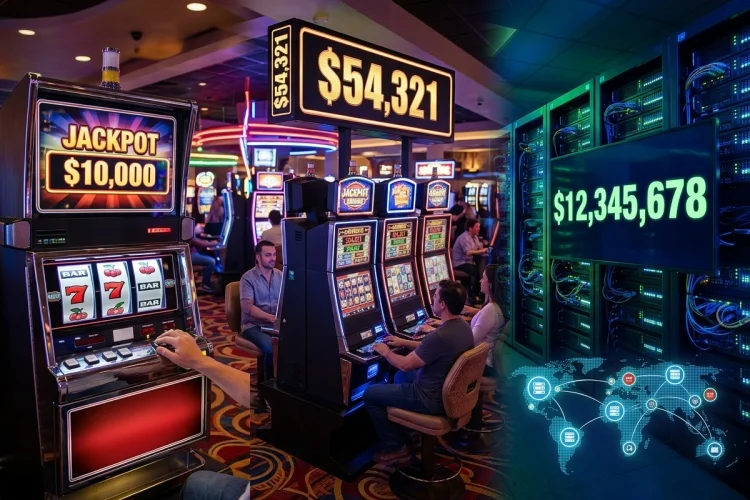
A jackpot does not need to connect casinos around the world to offer a growing prize. Sometimes, several games within one casino, gaming venue, or online platform contribute to the same shared pool.

This setup is commonly called a Local Progressive Jackpot. The prize starts at a predetermined value and increases as qualifying wagers are placed on the connected games.

Once an eligible player triggers the winning event, the accumulated amount is awarded and the meter normally returns to its reset value.

Although the concept sounds simple, players should understand which games contribute, which stakes qualify, and how the jackpot differs from standalone and multi-site systems.

A Shared Prize Within a Limited Network

“Local progressive” is a commonly used industry description rather than a universal regulatory category. Technically, it usually refers to a linked jackpot shared by multiple games within a limited environment, such as one casino or one operator’s platform.

GLI distinguishes a linked jackpot-multiple instances of gaming equipment contributing to one payoff-from a multi-site jackpot connected across several gaming venues.

How the Jackpot Pool Grows

A progressive prize increases according to its published contribution method. Part of each qualifying wager, or another calculated amount, may be added to the pool.

Suppose the system receives 0.5% of eligible turnover. If the connected games generate $200,000 in qualifying wagers, the contribution would be:

$200,000 × 0.5% = $1,000

This is only an example. The actual funding method should be stated in the jackpot rules. UK technical standards require operators to explain how a progressive prize is funded, including its starting value and any ceiling.

How It Differs From a Standalone Jackpot

A standalone progressive belongs to one game or one machine. Only activity from that individual game increases its prize.

A local linked system combines contributions from several participating games. This can produce faster growth than a standalone pool when more qualifying wagers are being made.

The exact speed still depends on player activity and the contribution rate. More connected games do not automatically mean better odds for an individual player.

How It Differs From a Wide-Area Jackpot

A wide-area or multi-site jackpot links games across multiple gaming venues. In online gambling, the network may also include several participating platforms where regulations permit it.

A local system has a narrower pool of participants. All else being equal, it may offer a smaller prize or grow more slowly because fewer games contribute, but this is not guaranteed. Seed values, contribution percentages, and player activity can produce very different results.

GLI defines a multi-site jackpot specifically as a linked system operating across multiple gaming venues.

How Is the Winner Selected?

A local progressive may be awarded through a particular symbol combination, bonus wheel, mystery event, or another published trigger.

Digital games generally use RNG-based systems to generate unpredictable outcomes. Independent testing laboratories examine RNG behaviour and game functions to verify that they operate according to the approved design.

A jackpot that has been growing for a long time is not necessarily close to paying. Previous unsuccessful rounds do not make the next spin a guaranteed winner.

Does Every Bet Qualify?

Not always. Some games require a minimum stake, an optional jackpot contribution, a specific number of active lines, or another qualifying condition.

The rules should clearly tell players when they are not eligible. Where a player contributes to a jackpot pool, UK guidance says that player should generally be eligible to win while playing the relevant game.

Always check the complete stake before playing. A higher qualifying wager makes a budget disappear faster without guaranteeing access to the prize.

What Happens After the Jackpot Is Won?

After a win, the progressive meter normally returns to its published reset or seed value. It then starts growing again from new qualifying contributions.

Eligible players should be able to see the current amount, and the display should be updated after a reset. Rules should also explain any jackpot cap and where further contributions go after that cap is reached.

The progressive component may be included in one combined RTP percentage or shown separately from the base game.

A Local Progressive Jackpot connects multiple games within a limited network to one growing prize pool. It is broader than a standalone progressive but narrower than a multi-site or wide-area system.

Qualifying wagers increase the jackpot until an eligible result triggers it, after which the amount usually resets.

Before playing, check which games are connected, how the pool is funded, what stake qualifies, and whether the advertised RTP includes the jackpot component.

Never assume that a large meter is due to pay. Read the official rules, choose an affordable entertainment budget, and stop when your predetermined limit is reached.

How Jackpot Slots Work: Fixed, Local, and Progressive Prizes

How Jackpot Slots Work: Fixed, Local, and Progressive Prizes

Alejandro Navarro07/10/202608/05/2026

Jackpot slots attract attention because they advertise prizes that can be much larger than ordinary line wins. Some display a fixed top prize, while others show a number that keeps increasing as more qualifying bets are placed.

But how do Jackpot Slots Work behind the spinning reels? The answer depends on the type of jackpot. A prize may be fixed inside one game, linked to machines at one venue, or shared across a network of online platforms.

The jackpot can be triggered through a symbol combination, a bonus feature, or a randomly selected qualifying result. Understanding the rules is essential because not every stake or game round automatically qualifies for the headline prize.

What Is a Jackpot Slot?

A jackpot slot is a game offering one or more top-tier prizes in addition to its regular payouts. The jackpot may appear in the paytable as a fixed amount or on a live meter above the reels.

Ordinary wins are usually based on matching symbols, paylines, clusters, or ways to win. The jackpot follows a separate set of conditions that should be explained in the game information.

Regulated progressive games must clearly describe how prizes are funded, determined, and awarded before customers commit to playing.

How Fixed Jackpots Work

A fixed jackpot has a predetermined value that does not grow with each wager. For example, a game might offer a top prize of 5,000 times the triggering stake.

If the qualifying stake is $1, a 5,000× jackpot would equal:

$1 × 5,000 = $5,000

The maximum award may depend on the selected bet or the number of active paylines. The paytable should state whether a lower stake receives the full amount or a reduced prize.

How Progressive Jackpots Work

A progressive jackpot can increase over time. It normally begins at a starting amount called a seed value, and part of qualifying wagering may contribute to its growth.

The exact contribution system varies. It might come from one game, several linked machines, or a much wider online network.

UK technical standards require progressive rules to explain how the prize is funded, its starting value, any upper limit, and what happens to additional contributions when the jackpot reaches a cap.

Local and Networked Jackpots

A local progressive may connect games inside one casino, website, or operator network. Since fewer players contribute, its prize pool may grow more slowly.

A wide-area or networked progressive can link eligible games across multiple locations or platforms.

More participation can produce a faster-growing headline value, although the exact probability of winning still depends on the approved game mathematics.

The current prize should be visible to eligible players and updated after changes, particularly when it resets following a win.

How Is the Winner Selected?

Some jackpots require a particular group of symbols to land on an active payline. Others are triggered through a bonus wheel, mystery event, or random qualifying result.

Digital slots generally use a Random Number Generator to determine outcomes. Independent laboratories test RNG systems to check that results are unpredictable and do not contain unfair bias toward selected outcomes.

Previous results do not make a jackpot due. A game that has not awarded its top prize recently is not required to pay it on the next round.

Does Every Bet Qualify?

Not always. Some games require a minimum stake, maximum stake, active jackpot side bet, or specific game mode.

The rules should clearly state when a player is not eligible. They should also explain the theoretical RTP that applies when the jackpot component is unavailable.

Before spinning, check the total wager and look for phrases such as “jackpot eligible,” “qualifying bet,” or “minimum stake required.”

What Happens After Someone Wins?

After a progressive prize is awarded, the visible amount normally returns to its seed value rather than falling to zero. The pool then begins growing again under the published rules.

Systems must also explain how simultaneous or apparently simultaneous triggers are handled. This matters for network games where communication delays could make two wins appear to happen at the same moment.

A reset does not make another jackpot impossible. Each new qualifying result remains subject to the game’s probability model.

Jackpot slots can offer fixed prizes, local progressives, or networked jackpots supported by qualifying play.

A jackpot may be activated through symbols, a bonus feature, or a random trigger, and the prize usually resets to a published seed value after it is won. Always read the paytable before playing.

Confirm the required stake, jackpot eligibility, funding method, and applicable RTP. Never assume a growing prize is ready to pay or increase your wager to chase it.

Treat jackpot slots as paid entertainment, choose an affordable limit, and stop once that money or your planned playing time is gone.

Why Do Megaways Slots Change Symbols on Every Spin?

Why Do Megaways Slots Change Symbols on Every Spin?

Alejandro Navarro07/06/202608/05/2026

A standard online slot normally keeps the same number of reels and rows throughout the game. Megaways slots look different because their layouts can expand or shrink whenever a new spin begins.

This creates an important question: why do Megaways Slots Change Symbols on Every Spin? The short explanation is that Megaways uses a random reel modifier.

Instead of showing a fixed number of positions, the game can choose a different number of visible symbols for each reel.

The changing layout affects how many possible winning routes are available. However, a larger grid does not guarantee a payout. The symbols, paytable, Random Number Generator, and game mathematics still determine the final result.

Megaways Uses Dynamic Reels

Megaways is a slot mechanic developed by Big Time Gaming. The company describes it as a random reel modifier that allows a spin to produce different numbers of symbols across the reels.

A typical Megaways game uses six vertical reels. Each reel may display between two and seven visible symbols, although individual games can use slightly different configurations.

This is why the grid can look short and compact on one round but much taller on the next.

Reel Heights Are Selected for Each Spin

When a new round starts, the game determines how many symbol positions will appear on each reel. One possible layout might contain three symbols on the first reel, five on the second, and seven on the third.

The following spin receives a new configuration. Evolution’s description of Dazzle Me Megaways states that the number of symbols on its reels is randomly selected on each spin, producing a changing number of Megaways.

The artwork does not change because the game is reacting to a player’s previous result. It changes because variable reel heights are a core part of the format.

Changing Reels Create Changing Win Ways

The number of possible routes is calculated by multiplying the visible positions across the reels.

Suppose a six-reel result displays:

3 × 4 × 5 × 3 × 6 × 4

That layout provides:

3 × 4 × 5 × 3 × 6 × 4 = 4,320 ways

When every reel displays seven positions, the familiar maximum is:

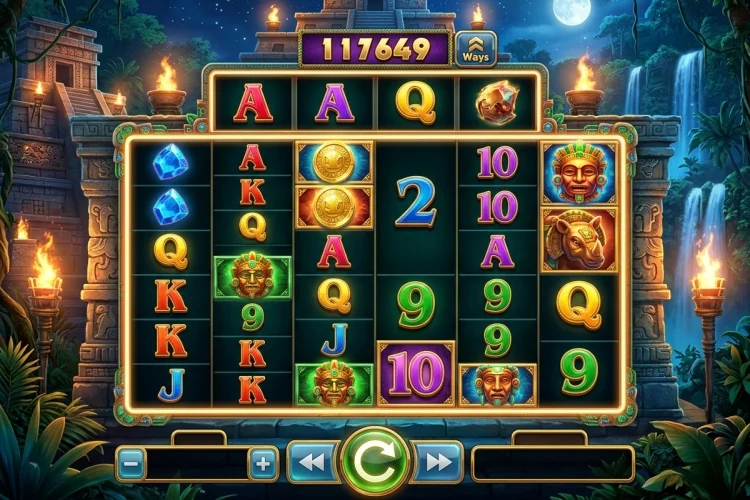
7 × 7 × 7 × 7 × 7 × 7 = 117,649 ways

Big Time Gaming uses this maximum in games such as Pirate Pays and Max Megaways.

The RNG Determines the Game Result

A digital slot generally relies on a Random Number Generator to produce its outcomes. The system determines the reel configuration and symbol arrangement according to the game’s approved mathematical rules.

UK Gambling Commission standards require RNG outcomes to be acceptably random and capable of passing recognised statistical tests. Adaptive behaviour designed to compensate for previous wins or losses is not permitted.

A small grid on one round does not make a fully expanded layout due on the next.

More Symbols Do Not Guarantee a Win

More visible positions create more potential routes, but the correct matching symbols must still appear on consecutive reels.

A spin offering 117,649 ways can produce no payout. Meanwhile, a smaller layout can produce several matching premium symbols.

The paytable, symbol frequency, wild mechanics, and payout values are designed around the changing grid. The ways counter describes the layout rather than the probability of making a profit.

Cascades Create a Different Type of Change

Many Megaways titles also include cascades or reactions. After a win, the participating symbols disappear and new icons fall into the empty positions.

This is different from starting a completely new paid spin. Bonanza, for example, combines Megaways with a dual-direction reaction system that replaces symbols from above and from an additional horizontal reel.

The game continues checking the layout until no new winning combination appears.

What Should Players Check?

Before playing, open the game’s information menu and check the reel range, maximum win ways, winning direction, cascade rules, RTP, and volatility.

Do not assume every title with a Megaways logo behaves identically. Some games have different maximum grid sizes, special reels, or bonus features.

Use demo mode to understand the changing layout before considering real-money play. When gambling is legal and age-appropriate, spending and time limits can help keep the activity controlled.

Megaways slots change their visible symbols because the format uses dynamic reel heights. Each new spin can produce a fresh grid, which changes the number of available winning routes.

The RNG also generates a new arrangement of symbols under the game’s mathematical rules. The changing screen creates variety, but it does not mean that a larger grid is guaranteed to win.

Cascades may replace symbols again after a payout, yet those reactions remain part of the same original round. Check the paytable, learn the reel rules in demo mode, and treat the changing ways counter as a feature-not a prediction.

What Are Megaways Slots? A Beginner’s Guide to Dynamic Reels

What Are Megaways Slots? A Beginner’s Guide to Dynamic Reels

Alejandro Navarro06/25/202608/05/2026

Traditional online slots usually keep the same number of rows on every spin. Megaways games take a different approach.

Their reels can display changing numbers of symbols, so the layout-and the number of possible winning combinations-may be different each time you press spin.

So, what are Megaways slots, and how do they work? Megaways™ is a dynamic slot mechanic created by Big Time Gaming. The system replaces a fixed grid and standard paylines with variable reel heights and potentially thousands of ways to win.

The format became especially well known through games such as Bonanza, although Megaways is now licensed across titles from multiple game providers.

What Makes Megaways Different?

A regular five-reel slot might show three symbols on every reel. That creates a consistent 5×3 grid from one round to the next.

A typical Megaways game uses six reels whose heights can change independently. Big Time Gaming describes its mechanic as displaying between two and seven symbols per reel, potentially creating up to 117,649 winning ways.

The result is a screen that may look narrow on one spin and much taller on the next.

How Variable Reels Work

Before each result is displayed, the game determines how many symbol positions will appear on every reel. One reel might show three symbols, another six, and another only two.

Because the reel heights change independently, the number of available win ways also changes. A screen with fewer symbols usually has fewer possible combinations than one where all six reels are fully expanded.

More visible positions do not guarantee a payout. They simply create a larger number of possible symbol routes.

What Does “Ways to Win” Mean?

Megaways games normally replace fixed payline shapes with adjacent-symbol combinations. In standard versions, matching symbols generally need to appear on consecutive reels from left to right.

You do not need to follow a diagonal or zigzag line. If a qualifying symbol appears more than once on a reel, each matching position may contribute another winning way.

The game’s paytable explains how many adjacent reels are required. Higher-value symbols may pay across three reels, while lower-value icons may need four or more.

Why 117,649 Is Commonly Advertised

A standard six-reel Megaways layout can display as many as seven symbols on each reel. Multiplying those positions gives the maximum number of ways:

7 × 7 × 7 × 7 × 7 × 7 = 117,649

This is a maximum rather than the number used on every round. If some reels display only two, three, or four symbols, the current total will be lower.

Certain Megaways titles can exceed the familiar figure by expanding reels further during special features. White Rabbit Megaways, for example, advertises up to 248,832 ways during its feature.

What Are Cascading Reels?

Many Megaways games combine dynamic reels with cascades, sometimes called reactions. After a winning combination is paid, its symbols disappear and new ones fall into the empty positions.

The game then checks the new layout for another win without deducting a separate stake. This process continues until no new winning combination appears.

Big Time Gaming’s Bonanza uses its Dual Reaction system to cascade symbols from vertical and horizontal directions. Not every Megaways title uses exactly the same cascading rules, so the paytable remains essential.

How Free Spins Usually Work

Free spins are commonly triggered by scatter or bonus symbols. During the feature, the game may add persistent multipliers, retriggers, sticky wilds, or fully expanded reels.

In Bonanza, for instance, winning reactions during free spins increase an unlimited multiplier. Other games use completely different feature structures.

A bonus can provide more rounds or enhanced mechanics, but it does not guarantee a profitable result.

RTP and Volatility Still Matter

Megaways describes the reel mechanic, not the game’s Return to Player percentage. Two Megaways slots can have different RTP settings, volatility levels, maximum payouts, and bonus probabilities.

RTP represents the theoretical return across extended play, while actual short-session results can vary considerably. RNG testing is also used to examine whether slot outcomes remain unpredictable and operate according to the approved mathematical model.

Check the active game’s information screen because the same title may be available in different mathematical configurations.

Megaways slots use changing reel heights to create a different number of winning ways on each spin. A typical six-reel game can offer up to 117,649 combinations, while cascades may create several consecutive evaluations from one paid round.

Free spins, multipliers, and special reel expansions can add further variety. These features make the layout more dynamic, but they do not guarantee better odds or regular wins.

Before playing, check the official paytable, current win-way count, RTP, volatility, and total stake. Explore unfamiliar mechanics in demo mode first and treat every real-money wager as an entertainment expense that could be lost.

How Many Scatters Are Needed to Trigger Free Spins? Simple Guide

How Many Scatters Are Needed to Trigger Free Spins? Simple Guide

Alejandro Navarro06/21/202608/05/2026

Scatter symbols are often the key to unlocking one of the most popular features in an online slot: the free spins round.

When the required number appears, the game may change its background, introduce extra wilds, and award several rounds without deducting a new stake for each spin.

So, how many scatters are needed to trigger free spins? Three is a common requirement, but it is not a universal rule. Some games need two, four, or five symbols, while others use collection meters or mystery triggers instead.

The exact answer always comes from the slot’s official paytable. Understanding the trigger rules before playing can prevent confusion and help you follow what is happening on the reels.

Three Scatters Are a Common Trigger

Many five-reel slots use three scatter symbols as the minimum requirement for entering the bonus round. These symbols may appear anywhere on the visible grid rather than following a traditional payline.

A typical game might award eight or ten free spins when three scatters land. However, this is a common design choice, not an industry-wide rule that every developer must follow.

The game description should explain the number and type of symbols required to qualify for a feature or bonus round.

Some Slots Require More or Fewer

A slot may trigger its bonus with two special symbols, particularly when one appears on a specific reel and the other lands elsewhere. Other games require four scatters before any feature begins.

Larger grids may use different systems because more symbol positions are visible. A six-reel game, for example, might use four qualifying icons rather than the familiar three-scatter format.

Never assume that a symbol labelled “scatter” automatically activates free spins after the third appearance.

More Scatters May Award More Spins

Even when three scatters are enough to start the bonus, landing four or five may produce a larger reward.

A game could use a structure such as:

Three scatters: 8 free spins
Four scatters: 12 free spins
Five scatters: 20 free spins

These numbers are only an illustration. Some games increase the number of rounds, while others add a larger starting multiplier or an immediate cash prize.

Read the paytable to see whether additional scatters change the feature or simply activate the same basic bonus.

Scatter Placement Can Matter

Scatter symbols often work independently of paylines, but their position may still matter. Certain slots allow bonus symbols to appear only on selected reels.

For example, the trigger might require one scatter on reels one, three, and five. Another game may accept three symbols anywhere on the screen.

Some titles also use “bonus” symbols rather than scatters. Although the icons may look similar, their rules can be different.

How Retriggers Work

Scatters may continue to appear after the free spins feature has started. When enough land during the bonus, they can award additional rounds. This is known as a retrigger.

Suppose a player starts with ten spins and receives five more during the fourth round. After that spin ends, eleven rounds would remain.

Some games permit repeated retriggers, while others set a maximum number of additional spins. The limit should be explained in the rules available to the player.

Does a Near Miss Mean a Bonus Is Coming?

Seeing two scatters and a third symbol stopping just outside the grid does not mean the feature is becoming more likely. The animation may look close, but it cannot predict the next round.

Online slots generally use a Random Number Generator to determine the symbols shown after each spin. Independent laboratories test RNG systems for unpredictability and potential bias.

Previous near misses, bonuses, wins, and losses do not force a particular result on the next spin.

Where to Find the Exact Requirement

Open the game’s information menu before placing a wager. Look for a question mark, paytable icon, “Help” button, or “How to Play” section.

The rules should identify the scatter symbol, minimum trigger requirement, number of awarded spins, retrigger conditions, and applicable multipliers.

Regulated games are expected to provide relevant rules and feature information before players commit money.

Demo mode can also help you explore the interface, but a practice result cannot predict what will happen during real-money play.

Three scatters commonly trigger free spins, but every online slot can use its own requirements. Some features need two or four symbols, while additional scatters may award more rounds, higher multipliers, or an immediate prize.

Placement and retrigger rules can also vary. The only reliable answer is found in the active game’s official paytable.

Check the trigger requirements before playing and never assume that repeated near misses mean a bonus is due. Treat free spins as part of a random game, set a firm entertainment budget, and stop when your planned money or time limit is reached.

How Do Free Spins Work in Online Slots? A Beginner’s Guide

How Do Free Spins Work in Online Slots? A Beginner’s Guide

Alejandro Navarro06/17/202608/05/2026

Free spins are among the most recognisable features in online slot games. Land a few special symbols, and the reels may suddenly switch to a bonus mode where several rounds are played without deducting a new stake from your balance.

However, the word “free” can be slightly misleading. In-game free spins usually need to be triggered through a paid round, while promotional spins from an operator may come with eligibility rules or withdrawal conditions.

Understanding how free spins work in online slots helps you read the game correctly and avoid unrealistic expectations. The feature may include extra wilds, multipliers, or retriggers, but every result is still controlled by the slot’s mathematical model.

What Are Free Spins?

Free spins are bonus game rounds that do not require an additional stake once the feature has started. They normally use the same basic reels as the main game, although the rules may change during the bonus.

For example, the base game may have ordinary wild symbols, while the free-spin round includes expanding wilds or increasing multipliers. Independent testing of regulated games can include checks that bonuses and free spins activate correctly and award the intended payouts.

How Are Free Spins Triggered?

A common trigger is landing three or more scatter symbols. These icons may need to appear anywhere on the grid rather than on a traditional payline.

A game might award eight spins for three scatters, twelve for four, and twenty for five. Other slots use collecting meters, mystery triggers, bonus wheels, or special symbol combinations.

The exact requirements are always explained in the paytable. Regulated online games should make their rules and available prizes accessible before a player commits money.

What Happens During the Bonus Round?

Once the feature begins, the game records the number of spins awarded and starts the bonus sequence. In some jurisdictions, bonus rounds can continue automatically because no additional wager is being placed for each individual spin.

The reel layout may remain unchanged, but special mechanics can become active. These may include sticky wilds, extra symbols, expanding reels, cascading wins, or prize multipliers.

Some games also allow retriggers. Landing another qualifying set of scatter symbols during the feature may add more spins to the remaining total.

Which Bet Value Is Used?

Free-spin payouts are usually connected to the stake used when the feature was triggered. If a player started the winning round at $0.50, the bonus normally continues using that betting value.

Suppose a free spin produces a payout worth 20 times the triggering stake:

$0.50 × 20 = $10

The precise calculation can vary. Some paytables use the total bet, while others refer to a line stake, coin value, or fixed prize table. Check the rules before assuming what a multiplier means.

Can Free Spins Guarantee a Profit?

No. A free-spin feature can finish without producing a meaningful payout. It may even return less than the amount spent on paid rounds before the bonus appeared.

Each outcome is generated according to the slot’s programmed probabilities. Game-engine testing includes examining random results, payout mathematics, bonus functions, and long-term simulations.

A feature that paid well during one session is not more or less likely to repeat that result the next time it appears.

Are Free Spins Included in RTP?

The potential returns from feature rounds are generally included in the slot’s overall Return to Player calculation. Testing can separately examine contributions from the base game, feature games, and jackpots.

This matters because part of an advertised RTP may depend on reaching the bonus. A short session in which the feature never appears can therefore finish far below the theoretical percentage.

RTP describes performance over extended play. It is not a promise that one bonus round will produce a particular amount.

Read the Rules Before Playing

Open the information menu and check how many symbols activate the feature, whether retriggers are possible, and how multipliers are applied.

Also confirm the total stake required to participate. A bonus feature should never be treated as something that is “due” after several losing rounds.

Use demo mode to learn unfamiliar mechanics without financial risk. When real-money gambling is legal and age-appropriate, decide on firm spending and time limits before starting.

Free spins are bonus rounds played without a new stake being deducted for each spin. They are commonly triggered by scatter symbols and may introduce wilds, multipliers, expanded reels, or retriggers.

Their prizes are usually based on the bet that activated the feature. Despite the name, in-game spins are often reached through paid play, and their outcomes remain unpredictable.

Read the paytable to understand the trigger, stake value, and payout rules before playing. Use a demo version first, treat every deposited amount as money that could be lost, and never continue solely because a bonus appears overdue.

High-RTP Slots Explained: What the Percentage Really Means

High-RTP Slots Explained: What the Percentage Really Means

Alejandro Navarro06/13/202608/05/2026

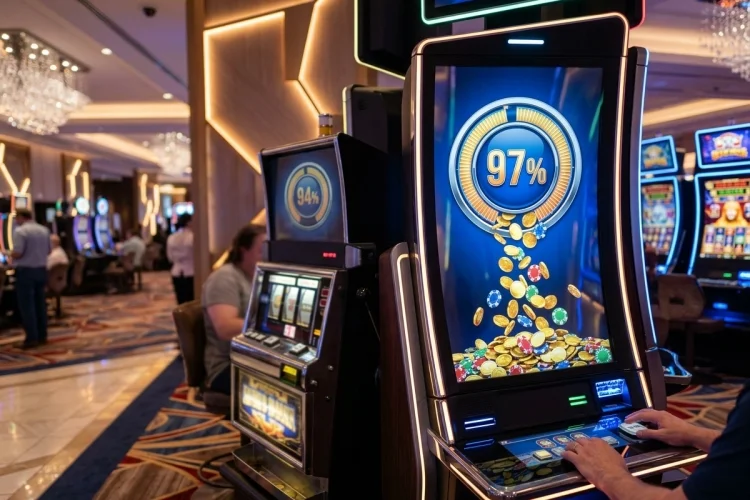
A slot showing a 97% Return to Player figure can sound much better than one displaying 94%.

The larger number usually represents a smaller long-term mathematical advantage for the operator, but it does not mean the game returns 97 cents every time someone wagers a dollar.

This High-RTP Slots Explained guide looks at what the percentage measures, why it matters, and where its limits begin.

RTP can help players compare the mathematical design of different games. It cannot predict a specific spin, guarantee a profitable session, or protect a limited budget from normal random variation.

What Makes an RTP “High”?

There is no universal percentage that officially defines a high-RTP slot. The word “high” is comparative: a game with 97% RTP has a higher theoretical return than one with 94%.

That comparison only applies to long-term game mathematics. Both titles still contain an advantage for the operator, and individual sessions can produce completely different results.

How RTP Relates to the House Edge

RTP estimates the share of total stakes that a game is designed to return as prizes over extensive play. The remaining percentage represents the theoretical house edge.

The calculation is simple:

House Edge = 100% − RTP

A 97% slot has an implied house edge of 3%. A 94% game has an edge of 6%. Across a huge volume of wagers, that difference can become meaningful.

Why RTP Is a Long-Term Average

RTP is not calculated from one player’s evening. Regulators describe it as an average reached over a significant number of games, with random machines requiring very large samples.

Someone could wager $100 on a 97% game and finish with $150, $30, or nothing. The percentage is a mathematical target across collective play, not a personal refund rate.

Actual results can remain far above or below the target during short periods. As the number of rounds grows, the measured return may move closer to the designed percentage.

Higher RTP Does Not Mean Frequent Wins

RTP measures the total value expected to be returned, not how often winning symbols appear. Two games can share the same percentage while distributing prizes very differently.

One may award frequent small returns. Another might reserve more of its payout value for uncommon bonus rounds or large prizes.

A winning animation can also represent a payout smaller than the original stake. For example, a $1 spin returning $0.40 is still a net loss of $0.60.

Where to Find the Official Percentage

Look inside the slot’s paytable, information screen, help menu, or game rules. Search for “Return to Player,” “theoretical return,” or “payout percentage.”

In regulated British online gambling, information about a game’s likelihood of winning must be accessible before the customer commits to play. This may be communicated through RTP, house edge, or event probabilities.

Check the number in the active game rather than relying only on reviews. An external article may describe a different software configuration.

How to Use RTP Sensibly

RTP works best as a comparison tool. When two games have similar features and risk profiles, the higher percentage generally represents the smaller theoretical long-term cost.

It should never become a reason to continue playing. Repeated bets increase total turnover, giving the house edge more opportunities to affect the balance.

Choose a fixed entertainment budget, check the total cost per spin, and stop when the limit is reached.

High-RTP slots have a smaller theoretical house edge than comparable games with lower percentages, but they are not guaranteed to produce better short-term outcomes.

RTP is measured across extensive play, while individual sessions remain unpredictable and may end with substantial losses. Use the number to compare game mathematics, then check volatility, payout rules, bonus contributions, and the exact software version.

Most importantly, treat every stake as money that could be lost. Read the official game information, set strict spending and time limits, and never use an attractive RTP as an excuse to chase losses.

What Is RTP in Slots? A Simple Guide to Return to Player

What Is RTP in Slots? A Simple Guide to Return to Player

Alejandro Navarro06/09/202608/05/2026

The percentage displayed inside a slot’s information menu can look like a promise. You might see “RTP 96%” and assume that spending $100 means getting $96 back. Unfortunately, slot mathematics does not work that neatly.

So, what is RTP in slots, and why should players pay attention to it? RTP stands for Return to Player. It estimates the percentage of all money wagered that a game is designed to return as prizes over a very large number of rounds.

RTP can help you understand a game’s long-term mathematical structure, but it cannot predict your personal result. A short session may end with a large win, a small loss, or no remaining balance at all.

What Does RTP Actually Mean?

Return to Player is expressed as a percentage. It represents the theoretical proportion of total stakes that a slot may return through prizes over extended play.

The UK Gambling Commission explains that RTP is an average achieved across a significant number of game rounds, not every time a machine is played.

For example, a slot with 96% RTP is mathematically designed to return approximately $96 for every $100 wagered collectively over the long term. The remaining $4 represents the theoretical operator advantage.

How Is RTP Calculated?

The basic formula compares total prizes with total money wagered:

RTP = Total Prizes ÷ Total Stakes × 100

Suppose a game receives $1,000,000 in wagers and awards $960,000 in prizes. Its actual return for that period would be:

$960,000 ÷ $1,000,000 × 100 = 96%

Regulators distinguish between theoretical RTP-the percentage built into the game-and actual RTP, which is calculated from real turnover and prize data.

Why RTP Does Not Guarantee Your Return

The most important word in RTP is “theoretical.” It describes expected performance across an enormous sample, not the result of one player’s evening.

Imagine placing 100 spins at $1 each on a 96% game. You are not guaranteed to finish with $96. You might receive $130, $40, or nothing, depending on the random outcomes.

GamCare notes that payout percentages are generally formed using at least 100,000 rounds rather than one individual spin or session. Testing laboratories may use even larger simulations to check whether results converge toward the intended figure.

RTP and the House Edge

RTP can also be used to estimate the game’s theoretical house edge. The calculation is straightforward:

House Edge = 100% − RTP

A 96% slot has a theoretical house edge of 4%. A 94% slot has an implied edge of 6%.

Over extended play, the higher edge generally means more of the total amount wagered is retained by the operator. However, the difference may not be noticeable during a short session because random variation can be much larger than two percentage points.

Does Higher RTP Mean More Frequent Wins?

Not necessarily. RTP describes the total value expected to be returned, but it does not explain how frequently prizes appear.

One 96% slot might distribute many small payouts. Another may reserve a significant portion of its theoretical return for rare bonus features or jackpots.

Both games could have the same advertised percentage while providing completely different experiences. This is why RTP should be considered alongside volatility, prize frequency, and the game’s paytable.

Where Can You Find the RTP?

The percentage is commonly listed in the game’s help menu, paytable, information screen, or rules section.

In regulated British online gambling, information that helps customers understand their chances must be available before they commit to a wager. This can include the RTP percentage, house edge, or probability of winning events.

Check the exact game rather than relying on a general review. Some slots can be supplied in several configurations with different return percentages.

Why RTP Matters to Players

RTP provides a useful comparison between games. All else being equal, a slot with a higher percentage has a smaller long-term mathematical disadvantage.

However, this does not turn the game into an investment. Random results can produce substantial losses even on a relatively high-RTP title.

Use the percentage as background information, not as a signal to continue playing. The longer money is repeatedly wagered, the more opportunity the mathematical advantage has to affect the overall result.

Understanding RTP helps separate slot mathematics from common misconceptions. It represents a theoretical long-term return across many wagers, not a guaranteed refund for an individual player.

A 96% figure does not mean every $100 session ends with $96, and it cannot reveal when a prize will appear. Before playing, check the percentage in the official game information, compare it with the paytable, and consider the game’s volatility.

Most importantly, establish an affordable entertainment budget and a clear stopping point. Use RTP to understand the risk, never as a reason to chase losses or keep spinning.

Online Slots Explained: Reels, Rows, Paylines and Payouts

Online Slots Explained: Reels, Rows, Paylines and Payouts

Alejandro Navarro06/05/202608/05/2026

Online slot games can look complicated when the screen is filled with symbols, numbers, flashing lines, and bonus animations. However, most of these games are built from a few basic elements that become much easier to understand once you know what they mean.

In this Online Slots Explained guide, we will break down reels, rows, paylines, and payouts using simple examples. You will also learn how special symbols work, why the visible reels do not control the outcome, and what terms such as RTP and volatility actually describe.

These explanations cannot help anyone predict the next spin. Instead, they provide a clearer understanding of how a digital slot presents its rules, calculates prizes, and communicates risk.

What Are Reels in an Online Slot?

Reels are the vertical columns that hold the game’s symbols. A classic slot might have three reels, while modern video slots commonly use five or more.

When a round begins, the reels appear to spin before stopping on a selection of symbols. The animation creates the visual experience, but the result is usually generated by the game software.

A five-reel game, for example, has five vertical columns. Increasing the number of reels creates space for more symbols and potentially more complicated winning patterns.

What Do Rows Mean?

Rows are the horizontal levels running across the game screen. If a slot has five reels and three rows, the visible grid contains 15 symbol positions.

Some games begin with a fixed number of rows. Others add or remove rows during bonus rounds, creating a larger or smaller playing area.

More rows do not automatically mean better odds. The probabilities, symbol values, and payout rules are adjusted according to the game’s mathematical design.

How Do Paylines Work?

A payline is a pattern connecting positions across the reels. A traditional line might run straight through the middle row, while others may move diagonally or form zigzag shapes.

Suppose three matching symbols must appear from left to right on an active line. If they land on unrelated positions outside that line, they may not produce a payout.

Some slots have fixed paylines, meaning every line is active on every spin. Others allow players to choose how many lines to activate, although the total stake may change as more lines are selected.

Regulated games should provide accessible information about rules, payouts, prizes, and the way a game works before money is committed.

Symbols and Their Different Roles

Standard symbols usually create ordinary line wins. Their values are listed in the paytable, with premium symbols generally paying more than lower-value icons.

Wild symbols may substitute for selected regular symbols, while scatters often pay independently of traditional paylines. Scatter combinations may also activate free spins or another bonus feature.

Some games include expanding symbols, sticky wilds, multipliers, or mystery icons. Because these features work differently between titles, checking the information screen is essential.

How Slot Payouts Are Calculated

A payout depends on the game’s paytable, the winning combination, and the applicable stake. The prize may be expressed as a fixed credit amount or as a multiplier.

For example, imagine that three matching symbols award 20 times the relevant bet. If the qualifying bet is $0.50, the calculation would be:

$0.50 × 20 = $10

Check whether the multiplier applies to the total stake, the line bet, or the coin value. Confusing these figures can make an advertised prize look larger than the amount actually awarded.

Why Every Spin Is Unpredictable

Online slots generally use a Random Number Generator to produce game results. Regulatory standards require random outcomes to be statistically unpredictable and prohibit adaptive systems that change results to compensate for earlier play.

This means the next spin is not affected by how long someone has been playing. A losing sequence does not make a winning combination “due.”

Independent testing organisations can examine RNG software to assess whether results are unpredictable and unbiased.

RTP and Volatility in Simple Terms

Return to Player, or RTP, is the theoretical percentage of total stakes returned as prizes over a significant number of rounds. It does not describe what one person will receive during a short session.

Volatility describes how payouts may be distributed. Lower-volatility games tend to offer smaller prizes more frequently, while higher-volatility games may produce fewer but potentially larger wins.

Neither measurement predicts the result of the next spin.

Reels are the vertical columns of a slot, while rows create the horizontal levels. Paylines connect selected positions, and the paytable explains which combinations produce payouts.

Special symbols can modify the rules, but every result still depends on the game’s underlying software and mathematical model. Before playing, open the paytable, identify the grid size, check the total stake, and understand how wins are calculated.

Remember that RTP is a long-term average and not a guaranteed personal return. Treat slots only as paid entertainment, follow local laws, and establish firm spending and time limits before starting.

Posts navigation

Older posts
Newer posts
IsaAutomationWeek.org All-Star-Tints.co.uk Synergie-Solutionsweb.com YukonBlondeStream.com Ultrasound.ws Nyxbetscasino.online Casinoaalborg.Top Casinobaden.Top Casinobern.Top Casino-Bremen.Top Casinocopenhagen.Top Casinodamadeira.Top Casinodapovoa.Top Casinodelavallee.Top Casinodicampione.Top Casinozaragoza.Top Goldensuncasino.Top Casino-Figueira.Top Casinoflamingo.Top Casinofontana.Top Casino-Graz.Top Casinoinnsbruck.Top Akses.club Casinolinz.Top Casino-Middelkerke.Top Casinopasha.Top Casinoperla.Top Casinoperalada.Top Casinoritz.Top Casinosalzburg.Top Casinoseefeld.Top Casinosyros.Top Casinothraki.Top Casinovelden.Top Hard-Rock-Casino.Top Rebuystarscasino.Top Sheriffcasino.Top Dream99.cyou Nagagg.cyou Turbocazino.cyou JettonGames.cyou Champion-Casino.cyou WinBig.cyou LinkRep.cyou Outsell.cyou StarSea.cyou Modzy.cyou StreamWithMe.cyou Dekat.cyou Quickist.cyou Solicit.cyou AspireHaven.cyou BadFlix.cyou QuarteAwless.cyou TradeSmartSolutions.cyou BulldogTruck.cyou FreeAlbites.cyou StockTrendAnalyzer.cyou EmpowerProgram.cyou

Featured

  • Best Fixed Jackpot Slots: Top Online Games and FeaturesBest Fixed Jackpot Slots: Top Online Games and Features
  • What to Check Before Playing a Jackpot Slot: 8 Essential ThingsWhat to Check Before Playing a Jackpot Slot: 8 Essential Things
  • Calculations in Megaways Slot Engines: How Maximum Ways WorkCalculations in Megaways Slot Engines: How Maximum Ways Work
  • Local vs Networked Jackpots: How Their Mathematical Models DifferLocal vs Networked Jackpots: How Their Mathematical Models Differ
  • What Is a Local Progressive Jackpot? A Beginner’s GuideWhat Is a Local Progressive Jackpot? A Beginner’s Guide

Latest Posts

  • Thunderkick Slots: Creative Themes and Features That Stand OutThunderkick Slots: Creative Themes and Features That Stand Out
  • Mobile Slots vs Desktop Slots Compared: Which Is Better?Mobile Slots vs Desktop Slots Compared: Which Is Better?
  • How to Improve Mobile Slot Game Performance: 9 Practical FixesHow to Improve Mobile Slot Game Performance: 9 Practical Fixes
  • Best Fixed Jackpot Slots: Top Online Games and FeaturesBest Fixed Jackpot Slots: Top Online Games and Features

Network

  • Link Trivabet
  • Slot Online
  • Slot Gacor
  • TBSLOT88
  • Demo Slot
  • Quick Travel
  • Game Slot
  • Situs Slot Gacor
  • Situs Slot88
  • Akun Demo Slot
  • About Us
  • Contact
  • Disclaimer
  • Privacy Policy
  • Terms & Conditions
© 2026 AguayPachamama.org | Theme: BlockWP by Candid Themes.